
Send Your Drawing (WhatsApp)
Padki.Gopal@zhengtaicastech.com | Vinay: +91 90350 12779
Every foundry application is unique. At Zhengtai Castech, we evaluate part complexity, annual tonnages, metallurgical alloy grades, and capital investment requirements to engineer the most cost-effective and metallurgical sound casting process.
Lost Foam Casting eliminates internal cores, draft angles, and parting line flash by replacing traditional sand cores with an expendable foam pattern (EPS or STMMA) surrounded by unbonded dry sand compacted under multi-directional 3D vibration.
Specialized Lost Foam route engineered specifically for large, intricate, and geometrically complex castings where traditional synthetic-wax investment casting patterns become cost-prohibitive or impossible to scale.
Francis turbine runners, heavy valve bodies, industrial pump casings, bimetallic wear castings, and multi-piece weldment replacements.
View Application Criteria →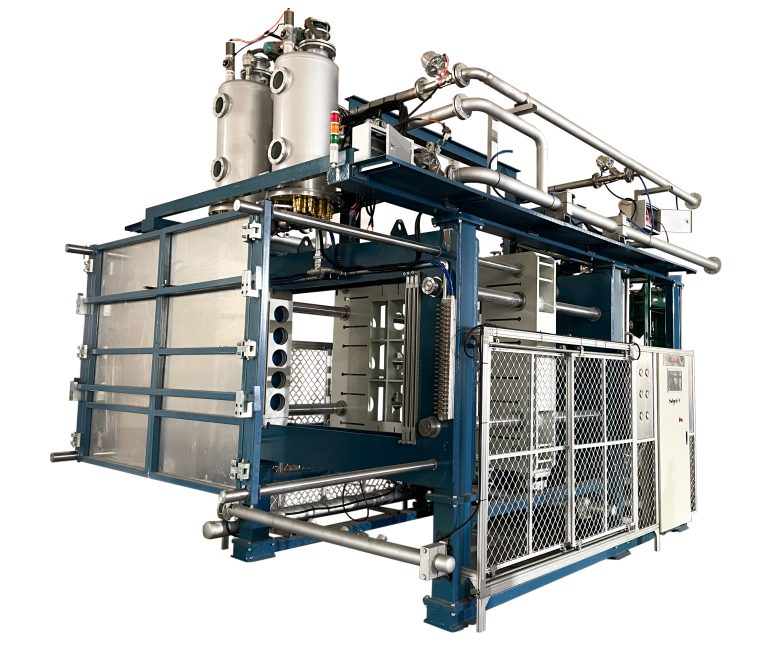
The Vacuum Process (V-Process) utilizes dry, binderless silica sand held rigid between thin EVA plastic films under continuous vacuum negative pressure. When molten metal is poured, the plastic film vaporizes while vacuum differential pressure maintains mould cavity geometry.
Engineered shell shooting and hot-box moulding systems providing exceptional dimensional repeatability and controlled mould permeability for high-volume precision castings such as hydraulic valves and automotive manifolds.
Precision horizontal and vertical centrifugal casting machines engineered for dense, defect-free cylindrical shapes including high-alloy tubes, pipes, bimetallic cylinder liners, and rolls with high G-force molten metal separation.
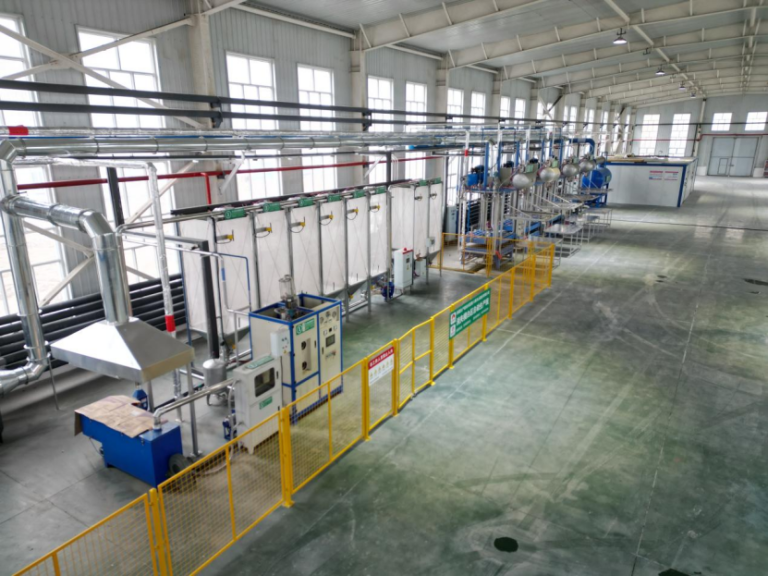
A seamless, continuous production sequence connecting pattern manufacturing, assembly, coating, vacuum-assisted pouring, and sand reclamation into one unified foundry line.
Precision tooling, automated pre-foaming, and molding of EPS/STMMA beads.
Multi-piece glue assembly with gating/riser clusters on automated jigs.
Refractory ceramic dipping and rapid drying in energy-efficient heat pump rooms.
Dry sand flask compaction, negative-pressure sealing, and molten metal pouring.
Flask dumping, casting shakeout, and 95%+ sand fluidized bed cooling and reclamation.
Evaluate how Lost Foam Casting compares to traditional foundry alternatives:
| Evaluation Criteria | Lost Foam Casting (LFC) | No-Bake Resin Sand | Investment (Lost Wax) |
|---|---|---|---|
| Internal Sand Cores | None (Eliminated by foam) | Multiple complex cores required | Soluble wax / ceramic cores |
| Moulding Sand Binder | 100% Unbonded dry silica sand | Expensive furan / chemical resins | Multi-dip ceramic refractory slurry |
| Sand Reclamation Rate | > 95% Continuous Recovery | 75% - 85% (High thermal attrition) | One-time shell destruction |
| Parting Line Flash & Draft | Zero draft angle required; no flash | 1° - 3° draft; significant flash | Minimal draft, high dimensional precision |
| Tooling & Pattern Cost | Moderate (Aluminum steam dies) | Low to moderate wood/metal patterns | Very high (Precision wax injection dies) |
| Best Suited Geometry | Intricate passages, thin walls, monolithic parts | Heavy, simple boxy castings | Small, high-alloy intricate components |
Share your 2D/3D casting drawings, alloy grades, and annual production volumes with our engineering team for a feasibility assessment.