1. The Heat Load Challenge in Continuous Foundry Loops
In a high-production Lost Foam Casting foundry pouring 40 to 60 tons of iron daily, molten metal at 1,420°C dumps immense caloric heat loads directly into the unbonded silica sand bed. When flasks are indexed to the shakeout station 45–60 minutes after pouring, the core sand temperatures frequently hover between 180°C and 350°C.
If this sand is recycled into subsequent flasks without thorough thermal extraction, return sand temperatures will escalate rapidly beyond 60°C.
- Premature Pattern Distortion: EPS and STMMA foam patterns soften and deform at temperatures as low as 65°C, destroying dimensional tolerances before pouring even begins.
- Thermal Shock on Refractory Coatings: Hot sand causes micro-cracking in the dried ceramic slurry skin, leading to severe metal penetration defects.
- Uneven Vacuum Evacuation: Thermal gradients create localized hot air updrafts that disrupt laminar vacuum negative pressure distribution.
2. Multi-Stage Fluidized Bed Water-Cooled Conditioning
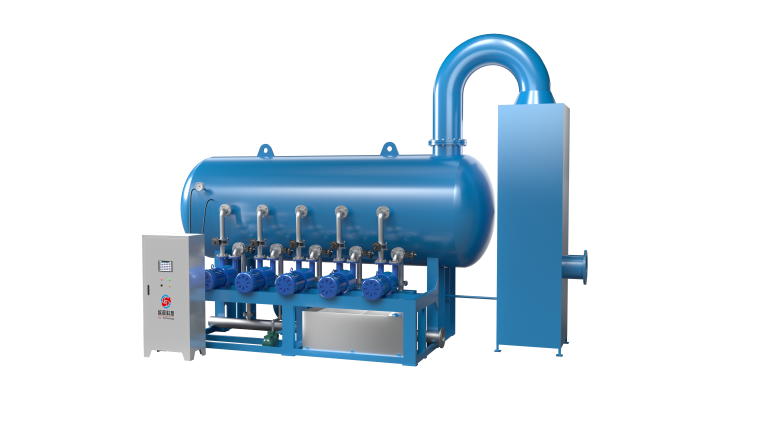
To bring sand reliably below 45°C within a compact plant footprint, rotary drums and static silos are insufficient. Zhengtai Castech implements a multi-stage continuous **fluidized bed heat exchanger**:
High-volume pressurized air blowers blow upwards through micro-slotted stainless tuyere plates, transforming heavy dry sand into a boiling, friction-free fluid state.
Submerged serpentine copper/stainless water cooling tube banks absorb latent heat directly from the boiling sand with heat transfer coefficients 8x higher than static sand.
Upward fluidizing air carries away broken fine sand particles (<140 mesh) and carbonaceous ash into cyclone collectors, maintaining constant AFS grain fineness.
3. Maintaining 95%+ Sand Recovery Efficiency
Because the sand is binderless, the continuous reclamation circuit loses only 2% to 5% of sand volume per cycle—primarily fines removed to preserve sand permeability.
By automating the cooling water circulation via closed-circuit cooling towers with variable frequency pump drives, energy consumption is kept strictly proportional to the hourly pouring tonnage.